45 km/h Electric Fat Bike: What French Law Says
Searching for a "45 km/h electric fat bike"? It's the question our customers ask most: "How fast am I allowed to go, and under what conditions?" The short answer: a road-legal e-bike cuts its assistance at 25 km/h, and anything that assists up to 45 km/h falls into a different legal category. In France, it becomes a moped, with all the obligations that come with it. Here's what that means for you, point by point, before you buy.
In this article
- 45 km/h electric fat bike: which legal category?
- How does a road-legal e-bike differ from a 45 km/h model?
- What do you need to ride legally at 45 km/h?
- What about power: 250 W, 500 W, 750 W – what's the difference?
- Where can you ride a powerful fat bike?
- Do you really need 45 km/h?
- How to read a fat bike's product page to check its legal status
- Three rider profiles, three good choices
- How to avoid nasty surprises when buying
- Frequently asked questions
Published 25 November 2026, updated 25 November 2026, by Julien Ferrand.
How we wrote this guide
This guide draws on the product sheets and guidance published by fatbike-factory and the official sources cited in the article. It was written by Julien Ferrand. Julien has been riding electric fat bikes for several years, both in town and on coastal trails, and prepares bikes for shipping at Fatbike Factory. Every week he advises customers on choosing a model, batteries and e-bike regulations.
45 km/h electric fat bike: which legal category?
In France, the Code de la route (the French Highway Code) draws a clear line between two types of vehicle. On one side is the electrically assisted bike, or pedelec: a motor with a maximum continuous rated power of 250 W, assistance that only works while you pedal, and that cuts out at 25 km/h. On the other is the moped, which is where a 45 km/h electric fat bike belongs. The official Service Public page on registering an electric bike (the French government's information website) makes it clear: above 250 W and 25 km/h, the vehicle is no longer a bicycle.
In practice, a "45 km/h" fat bike isn't just a slightly faster bike: it's a different vehicle, and in France it must be type-approved as such, registered and insured. Without that type approval, it can't be ridden on public roads, however it's sold or marketed.
How does a road-legal e-bike differ from a 45 km/h model?
The table below sums up the key points under French rules. Every figure in it comes from the regulations or from our product pages.
| Criterion (France) | Road-legal e-bike (250 W) | 45 km/h moped-type vehicle |
|---|---|---|
| Assistance | Cuts out at 25 km/h, only while pedalling | Up to a claimed 45 km/h |
| Type approval | Bicycle standard, no paperwork | Moped type approval required |
| Number plate and registration document | No | Yes |
| Insurance | Not compulsory (recommended) | Compulsory |
| Helmet | Recommended | Approved helmet compulsory |
| Licence | None | Licence required depending on your circumstances |
| Cycle lanes | Allowed | Generally not allowed |
This list is deliberately short. Insurance, number plates and licences are covered in detail in our article on insurance, number plates and the French AM moped licence for fast fat bikes, which complements this guide.
What do you need to ride legally at 45 km/h?
In France, a vehicle of this type needs five things before it can be ridden on open roads. If even one is missing, you're riding illegally, and it's you, not the seller, who bears the consequences.
- A vehicle type-approved as a moped, with its certificate of conformity.
- Registration: a registration document and a number plate fitted to the vehicle.
- Valid third-party liability insurance.
- An approved helmet and suitable gloves.
- A licence appropriate to your age and circumstances.
A vehicle sold as a "45 km/h electric fat bike" without these documents can't be used on public roads. We'd rather be straight with you here: if the seller can't give you the certificate of conformity, walk away.
What about power: 250 W, 500 W, 750 W – what's the difference?
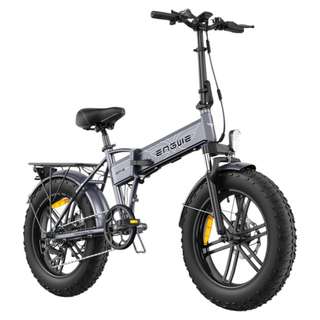
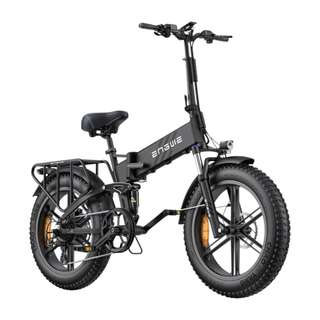
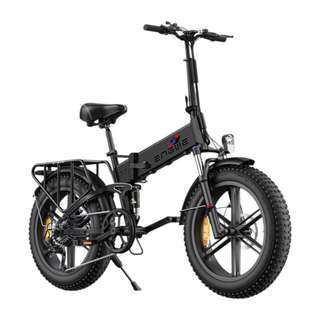
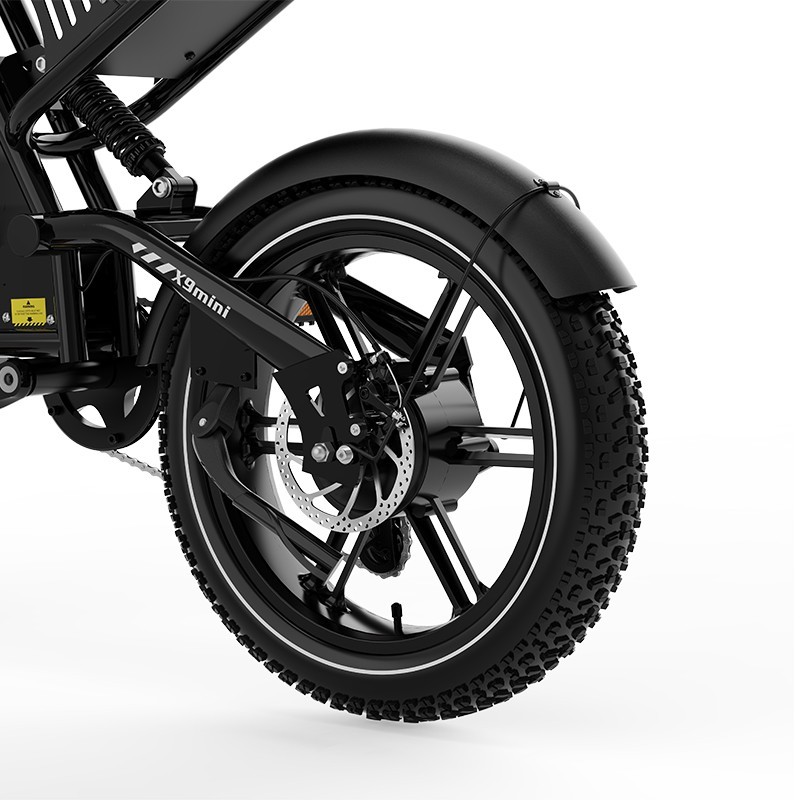
Power and speed are related but separate issues. A 750 W motor doesn't by itself mean riding at 45 km/h: what matters is how the assistance is set and how the vehicle is designed. In our range, the Koolux X9 Pro has a 750 W motor with a claimed top speed of 45 to 50 km/h, a dual 48 V 15.6 Ah battery and a net weight of 46.5 kg. By contrast, the Koolux X9 Mini has a 500 W motor and a claimed speed of 32 km/h.
These are the manufacturer's figures, measured on open, unobstructed ground. They don't mean the model can be used that way on public roads: with assistance above 25 km/h, it's no longer a bicycle. We point this out on every product page concerned.
Where can you ride a powerful fat bike?
A model that isn't type-approved for the road can still be used on private land with the owner's permission, or on a closed circuit – just as you would with a quad or a motocross bike. Many of our customers buy the X9 Pro for an estate, a leisure ground or a large worksite, and keep a 250 W model for getting around town.
For the road, there are compliant fat bikes: that's the range we list under road-legal 250 W fat bikes. They can go anywhere a bicycle can, with no number plate or compulsory insurance, and assistance up to 25 km/h. If you love the motorbike look without the constraints, our motorbike-style e-bikes category brings together models with an imposing build – just choose knowing exactly what their legal status is.
Do you really need 45 km/h?
In our experience, rarely. In town, traffic keeps your average speed well below 25 km/h; off-road, a heavy fat bike calls for careful braking and caution anyway. Customers who tell us they want "45 km/h" are usually after punchy acceleration, power on hills and range, not top speed. You can get all three from a compliant model with high torque and a big battery.
Before you buy, ask yourself three questions: where will you ride day to day, who will ride it, and are you ready for the paperwork that comes with a moped? If any answer gives you pause, stick with a road-legal e-bike.
How to read a fat bike's product page to check its legal status
A trustworthy product page answers three questions plainly. First, the motor's rated power: 250 W is the threshold for a compliant e-bike. Second, the speed at which the assistance cuts out: 25 km/h for a pedelec. Third, whether it's intended for road or off-road use. When a page quotes a "top speed" without saying whether it refers to the assistance or to top speed on open ground, ask for clarification.
On our product pages, we list the power, battery capacity and maximum load (120 kg for both the X9 Pro and the X9 Mini), and when a model goes beyond the scope of an e-bike, we say so. A heavier machine, like the 46.5 kg X9 Pro, also needs brakes to match: it's fitted with hydraulic brakes, which are more progressive than a mechanical system – something that really matters as speed increases.
Three rider profiles, three good choices
To help you decide, here's how most of the enquiries we receive each week break down.
- You ride every day in town or the suburbs: a road-legal 250 W fat bike, with no paperwork and good range.
- You want style and a motorbike-sized build: a model from our motorbike-style e-bike category, checking its exact status and using it as intended.
- You want power on private land: a 750 W model such as the X9 Pro, used off public roads, with a helmet and protective gear.
In all three cases, the right question is never "what's the top speed?" but "where will I actually ride?". That answer determines the model, the budget for gear and any paperwork involved.
How to avoid nasty surprises when buying
A few simple habits will spare you most disappointments. Read the product page all the way through and look for the legal status. Be wary of listings promising "up to 50 km/h" without a word about type approval. Ask in writing whether the model is sold for road use or for off-road use only, and keep that reply.
Finally, never count on "derestricting" to fix the problem afterwards: it doesn't make the vehicle legal – quite the opposite, it makes it non-compliant, as we explain in our article on the risks of derestricting.
Key takeaway: this article gives general guidance on the rules in France and is no substitute for advice from a road traffic law professional or your insurer. Rules differ between countries, so check your local regulations. Before buying a fast model, talk to your insurer and check the rules currently in force.
— Julien Ferrand
Frequently asked questions
Is a 45 km/h electric fat bike allowed on the road?
In France, only if it's type-approved as a moped. It must then be registered, insured and ridden with an approved helmet. Without these, it's restricted to private land.
What is the maximum speed of a road-legal e-bike?
Under EU rules, a compliant e-bike's assistance cuts out at 25 km/h. You can go faster under your own pedal power, downhill for example, but the motor no longer helps you beyond that speed.
Is a 750 W motor illegal?
It isn't banned in itself, but it falls outside the scope of a 250 W e-bike. The vehicle then belongs to a different category with its own rules. Always check the status shown on the product page before you buy.
Can you ride a moped in a cycle lane?
In France, generally not: cycle lanes are reserved for cycles, and mopeds use the road. For special cases, check with your local council (mairie).
Which fat bike should I choose to ride legally in town?
A road-legal 250 W model whose assistance cuts out at 25 km/h. In France, it can be ridden without a number plate, compulsory insurance or a licence. Choose it mainly for its battery and its hill-climbing torque.