
 Français
 Italiano
 Deutsch
 Svenska
 Español

A two-seater fat bike is an electric fat bike with a long seat, a frame and a payload that let you carry a passenger. Before you look at the styling, check three figures on the spec sheet: the maximum load, the motor torque and the battery capacity. These are what decide whether the bike is still pleasant to ride with two people on board, and they are where the models really differ.
In this guide, we look at what sets a true two-seater apart from a bike that only looks like one, compare the long-seat models we sell, and give you a simple method for choosing yours.
In this article
How we wrote this guide
This guide draws on the product sheets and guidance published by fatbike-factory and the official sources cited in the article. It was written by Julien Ferrand. Julien has been riding electric fat bikes for several years, both in town and on coastal trails, and prepares bikes for shipping at Fatbike Factory. Every week he advises customers on choosing a model, batteries and e-bike regulations.
What makes a true two-seater fat bike
Lots of moto-style fat bikes have an extended seat. That alone doesn't make them a bike for two. A two-seater fat bike worthy of the name brings together four things: a seat long enough for two people, footrests for the passenger, a frame and wheels designed for a heavy load, and brakes powerful enough to stop the whole lot.
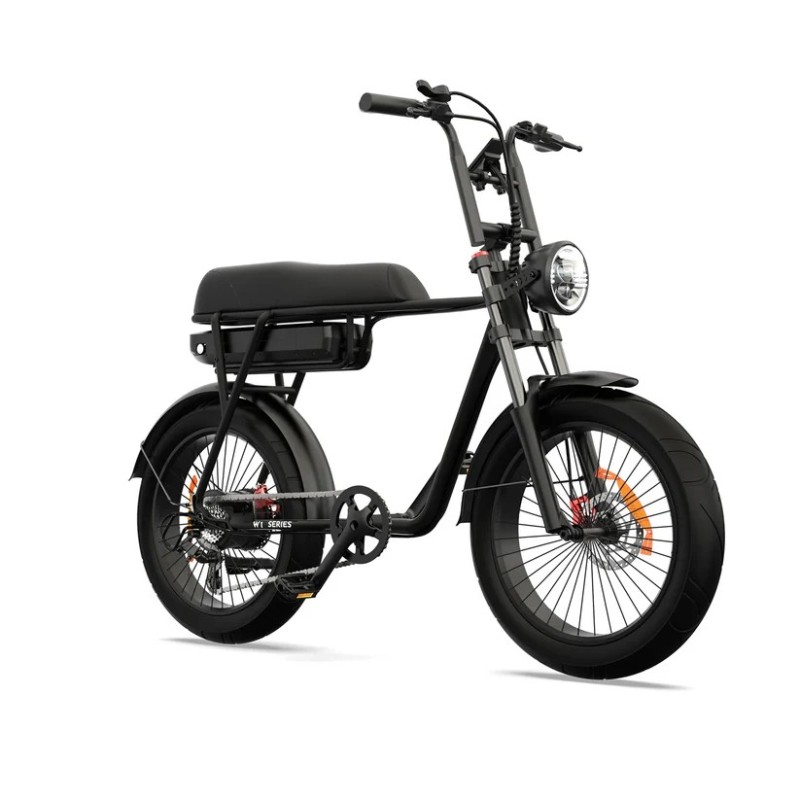
The long seat is the most obvious feature. On the Pinscher W1 Series, it is billed as a waterproof "duo" seat: a genuine shared saddle, not just a stretched cushion. Footrests, on the other hand, are often overlooked in reviews, even though they are key to the passenger's comfort and safety: with nowhere to rest them, the passenger's feet dangle close to the spokes and chain.
Signs of a bike designed for two
- a long, one-piece seat with padding along its full length;
- fold-down footrests or a platform for the passenger;
- a grab handle or strap for the passenger to hold on to;
- a stated payload of at least 150 kg for two adults;
- hydraulic rather than mechanical brakes.
If any of these is missing, the bike may still be an excellent solo fat bike, but you'll need to think more carefully before putting someone on the back.
Payload, frame and seat: the factor that rules out the most models
The payload, sometimes called the maximum load, is the total weight the manufacturer allows on the bike: rider, passenger and luggage included. It is the most important figure for riding two-up, and also the one people read least. Two adults of average build quickly exceed 140 kg, before you even add a rucksack.
Across our range, the differences are clear. The Koolux X9 Pro has a stated maximum load of 120 kg: comfortable for an adult and a light child, but too tight for two adults. The Engwe M20 also lists a 120 kg payload. Before choosing a model for riding two-up, do the maths honestly and leave some headroom: a bike that is constantly ridden at its limit wears faster, especially the spokes, bearings and brake pads.
To find out more, our article on the maximum weight an electric fat bike can carry explains how to read this figure across different brands.
Frame and wheels
The 20 x 4-inch tyres on moto-style models have a real advantage when riding two-up: their large air volume cushions and spreads the load. The flip side is that they need to be inflated correctly. An under-inflated tyre carrying 150 kg heats up, squashes in corners and drains the battery much faster. Check the pressure before every two-up ride, within the range shown on the tyre sidewall.
Motor, torque and battery when riding two-up
In France, as across the EU, an electrically assisted bike that can be ridden on public roads is limited to 250 W of continuous rated power, with assistance that cuts out at 25 km/h (15.5 mph) and only works while you pedal. With two on board, that power is still enough on the flat, but it's torque, measured in newton metres, that makes the difference when pulling away and on hills.

The Pinscher W1 pairs its 250 W motor with a torque sensor: the assistance follows the force you put through the pedals, making loaded starts smoother and more predictable than with a basic speed sensor. The Engwe M20 is rated at 55 Nm. The Koolux X9 Pro, with 750 W and a stated top speed of 45–50 km/h (28–31 mph), is in a different class: under French rules it falls outside the e-bike category and cannot be ridden on public roads in France like a bicycle without the appropriate type approval. We cover these rules in our article on fines for riding a non-compliant e-bike in France.
Real-world range when riding two-up
Advertised ranges are measured in favourable conditions, often with a single rider and the lowest assistance level. With two on board, expect noticeably less: the motor works harder every time you accelerate. A big battery is therefore a real asset on a two-seater. The Pinscher W1 carries a 48 V 18.2 Ah battery, for a stated range of up to 110 km (68 miles); the Koolux X9 Pro has two 48 V 15.6 Ah batteries, 31.2 Ah in total, for a stated 120 km (75 miles). Our guide to electric fat bike range in kilometres explains how to estimate yours.
Brakes and tyres: safety first
A bike carrying two people takes longer to stop. That's simple physics, and it's why we recommend hydraulic disc brakes on a two-seater fat bike. They need less effort at the lever, stay progressive and heat up less quickly on long descents than mechanical brakes.
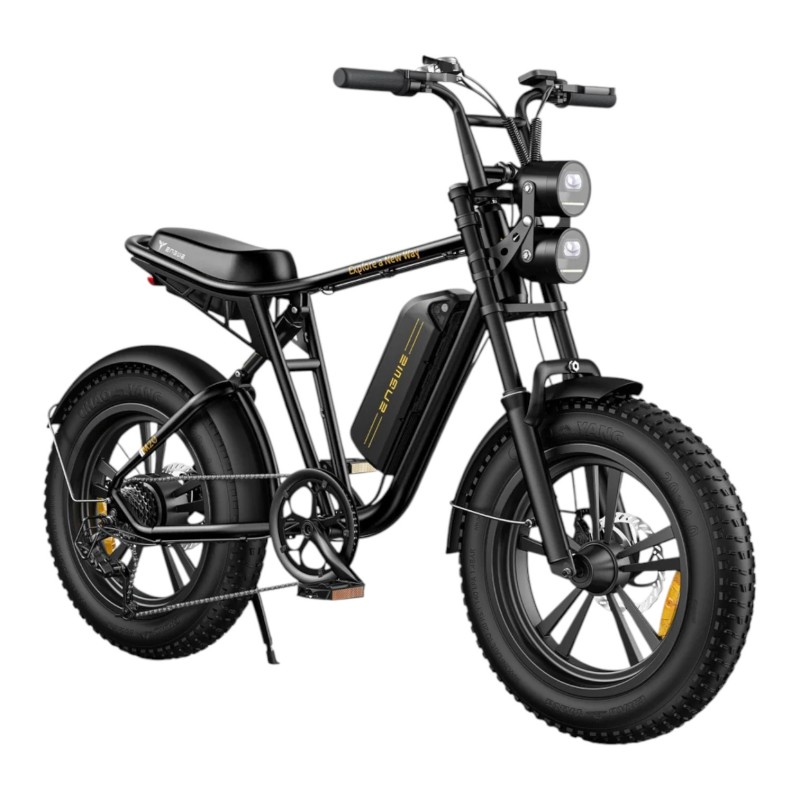
The Pinscher W1 and the Koolux X9 Pro both have hydraulic brakes. The Engwe M20 uses 160 mm mechanical discs, which work well solo but call for more anticipation and more frequent adjustment when riding loaded. If you notice a loss of bite, our article on electric fat bike braking problems lists the most common causes.
As for tyres, keep an eye on wear on the rear tread, which carries most of the passenger's weight. Replacement options are covered in our guide to fat bike tyres.
Our long-seat models compared
Here are the fat bikes in our range with a seat that can take a passenger, with the figures from their product pages. Prices change with promotions: the current price is shown on each product page.
| Model | Motor | Battery | Stated range | Brakes | Road use |
|---|---|---|---|---|---|
| Pinscher W1 Series | 250 W, torque sensor | 48 V 18.2 Ah | up to 110 km (68 miles) | hydraulic | EU-compliant e-bike, 25 km/h |
| Engwe M20 | 250 W, 55 Nm | 48 V 13 Ah (optional second battery) | 75 km (47 miles), 150 km (93 miles) with dual battery | 160 mm mechanical discs | EU-compliant e-bike, 25 km/h |
| Koolux X9 Pro | 750 W | 2 x 48 V 15.6 Ah | up to 120 km (75 miles) | hydraulic | outside e-bike rules (45–50 km/h) |
Our take: for riding two-up on the road while staying within e-bike rules, the Pinscher W1 is the most sensible choice, thanks to its duo seat, torque sensor, large battery and hydraulic brakes. The Koolux X9 Pro appeals with its power and twin batteries, but its 120 kg maximum load and its speed mean it's best kept for private land, or for a rider with a light passenger. The Engwe M20 remains a very good moto-style fat bike for solo riding. Browse every model in our electric fat bike category, or only the compliant models in our road-legal 250 W fat bike category.
How to choose your two-seater fat bike in 5 steps
This is the method we follow with customers who call us about a two-seater bike:
- Add up the weights: rider, passenger and luggage, then add a margin of around 10 kg. Rule out any model with a lower payload.
- Decide where you'll ride: on public roads, stick to an EU-compliant e-bike (250 W, 25 km/h); a more powerful model only makes sense on private land.
- Check the seat and footrests: the seat should fit two people without pushing the rider towards the handlebars.
- Look at torque and battery: a torque sensor and a high capacity make up for the passenger's weight.
- Insist on hydraulic brakes if you often ride two-up or in hilly areas.
Once your bike arrives, plan a few practice rides two-up in a car park or on a quiet road: pulling away, braking and turning with a passenger take some getting used to. Think about maintenance too, which is needed more often when the bike is ridden loaded; our electric fat bike maintenance guide gives you the right service intervals.
Finally, find out about the rules on carrying a passenger. In France, they are set out by the Sécurité routière (the French road safety authority) on its cycling page; rules differ between countries, so check the regulations where you ride. This guide is no substitute for advice from your insurer or a legal adviser on your specific situation.
Two-seater fat bike FAQs
What payload do you need for two adults?
Aim for a payload of at least 150 kg for two adults. Two people of average build already weigh more than 140 kg without luggage. A model limited to 120 kg is better suited to an adult with a light child.
What range can you expect riding two-up on an electric fat bike?
Expect noticeably less than the stated range. Spec-sheet figures are measured with a single rider and low assistance. A high-capacity battery or a dual battery narrows that gap.
Is a 250 W motor enough for a two-seater fat bike?
Yes, on the flat and on moderate hills. It's the torque and the torque sensor that make loaded starts comfortable. On steep climbs, the rider will need to pedal harder.
Is a two-seater fat bike harder to handle?
Yes, especially at low speed and when pulling away. The passenger's weight adds to that of the bike, which is often over 33 kg. A few practice rides in a car park are usually enough to get the hang of it.
Can you carry a child on a two-seater fat bike?
Yes, provided you follow the safety rules for passengers. In France, a child under five must sit in a suitable child seat with a restraint system, and a helmet is compulsory for all children under 12, whether riding or as a passenger. Rules differ between countries, so check your local regulations.
Our pick: Electric Fat Bikes
Browse all our models in the Electric Fat Bikes collection.
Koolux X9 Pro 750W Two-Seater Electric Moto Fat Bike with Dual Battery |  |  |